
CRM, automation & analytics
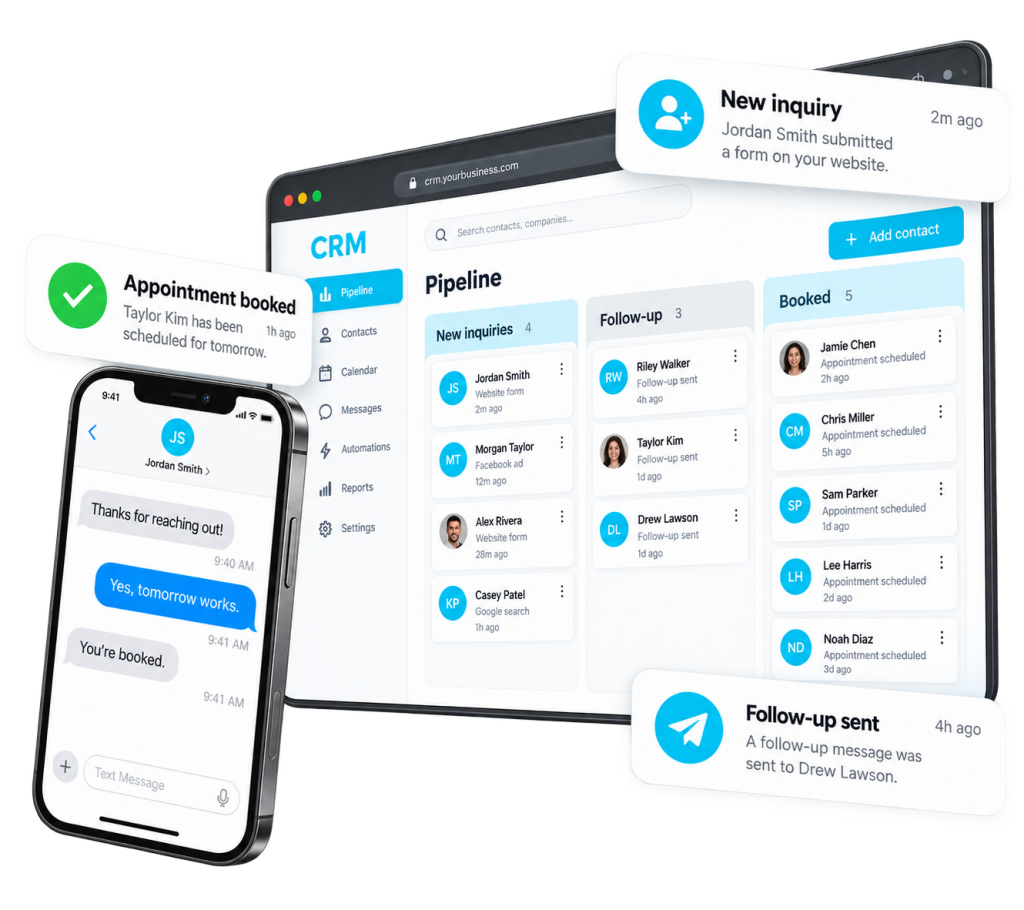
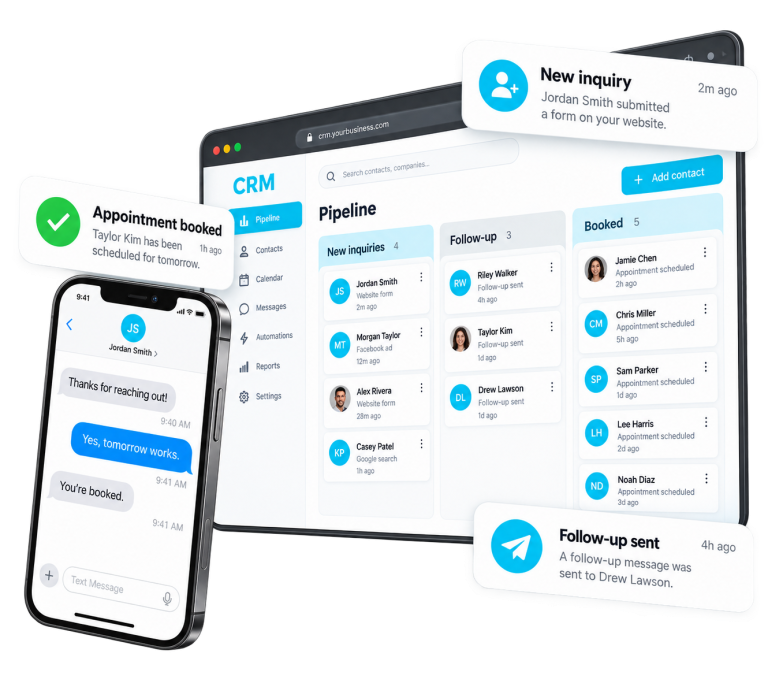
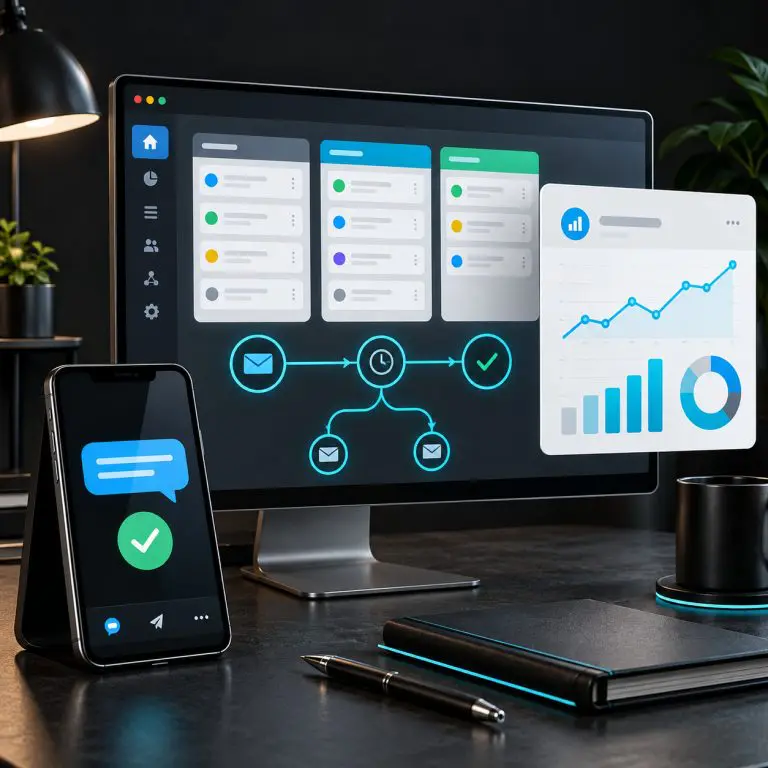
Give every inquiry a clear owner and next step. We configure your CRM, connect forms and booking tools, build follow-up workflows, and make pipeline activity easier to understand.
Corpus Christi, Texas · Working locally, nationally, and internationally.
THE LEAD IS ONLY THE BEGINNING
Marketing can create an opportunity and still lose it inside a spreadsheet, inbox, disconnected system, or unclear handoff.
A new inquiry should not disappear between a form, an inbox, and a sales conversation. We map how leads enter the business, who responds, what happens next, and where the record is kept. The aim is a clearer handoff and a useful customer experience—not automation for its own sake.
Help the right person see the inquiry, understand the context, and know what should happen next.
Create useful communication for prospects who are ready now, later, or not yet sure.
Bring source, activity, status, notes, and next actions into a system the team can use.
Make handoffs, conversion stages, delays, and data gaps visible enough to improve.
WHAT WE DO
The right system is not the one with the most features. It is the one your team can operate, understand, and improve.
Define lifecycle stages, fields, ownership, permissions, workflows, and reporting around the real sales process.
Connect inquiries from websites, campaigns, calls, bookings, or other approved sources to the right owner and next step.
Build permission-aware confirmations, reminders, follow-up, and nurture sequences around useful customer moments.
Create relevant paths for new leads, active opportunities, customers, repeat business, and re-engagement where appropriate.
Connect required systems, reduce duplicate or incomplete records, and document where data enters and changes.
Define stages and measures, combine available marketing and sales context, and report what the evidence can responsibly support.
AUTOMATION WITH A PURPOSE
The goal is not to send more messages. It is to make useful communication timely, relevant, and easier for the team to manage.
Use customer context and lifecycle stage to avoid treating every contact the same.
Trigger communication around a real action, need, handoff, or agreed follow-up interval.
Automation supports the relationship. It does not remove responsibility for judgment, response, or escalation.
HOW WE WORK
We begin with how the business actually operates, then configure the technology around that reality.
Document lead sources, stages, ownership, handoffs, communication, systems, reporting, and current failure points.
Define the data model, workflow logic, permissions, messages, integrations, and measurement plan.
Configure the approved system, connect required sources, test the workflows, and prepare users for launch.
Support practical use, monitor data quality and handoffs, and prioritize improvements from real operation.
MEASUREMENT PEOPLE CAN USE
A useful report explains how opportunities move, where the data is incomplete, and what the team should investigate or change next.
Define stages clearly enough to see volume, movement, delay, loss, and ownership.
Connect marketing source and customer activity to later outcomes where identity, integrations, and data quality allow.
Separate verified outcomes from platform-reported influence, modeled contribution, and incomplete data.
Turn the review into a clear decision about process, message, audience, offer, or execution.
CONNECTED CUSTOMER JOURNEY
Connect CRM and automation to the strategy, website, campaigns, and content that create the inquiry.
Capture the right information and create a clear next step before the handoff begins.
Carry source, offer, campaign, and conversion context into follow-up and reporting.
Define the customer journey, ownership, measures, and priorities the systems must support.
Straight answers
Clear scope. Practical expectations. No guesswork.
Often, yes. We first evaluate whether the current platform can support the required workflows, integrations, reporting, governance, and team adoption before recommending whether to keep, reconfigure, or replace it.
The answer depends on the business model, sales process, users, required integrations, data needs, operating capacity, and budget. We do not choose a platform before understanding those requirements.
Yes, when messaging is included in the scope. Every communication should have a defined audience, trigger, purpose, ownership path, and approval process.
Sometimes, but the strength of that connection depends on identity, data quality, integrations, sales-stage discipline, and whether transactions are captured in the system. We explain what is verified and where gaps remain.
Timing depends on the current systems, number of sources and integrations, workflow complexity, data cleanup, approvals, testing, and user readiness. The sequence and responsibilities are defined before implementation begins.
No. Automation handles repeatable steps and makes ownership more visible. People remain responsible for judgment, conversations, exceptions, and the customer relationship.
Let’s talk
Tell us where inquiries come from, how your team handles them now, and where visibility or momentum gets lost.
A focused conversation. Clear next steps. No generic pitch.