

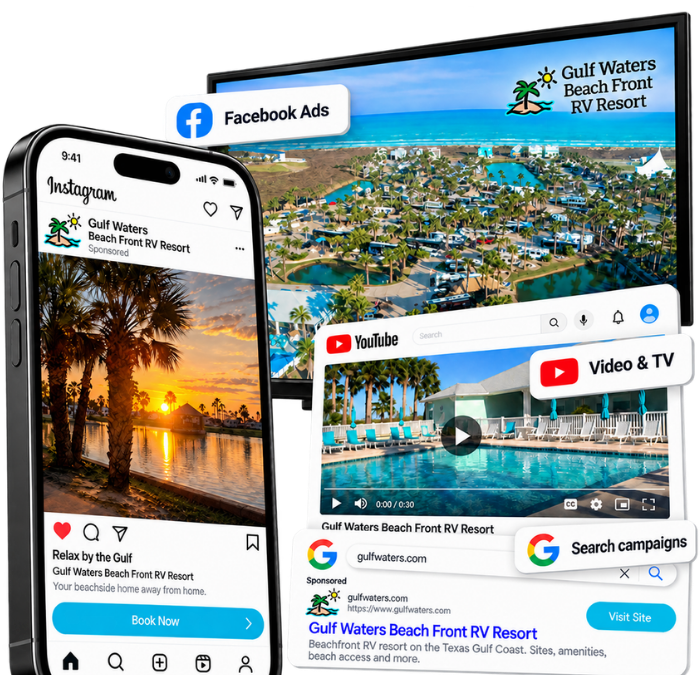
“Should we use Google Ads or Facebook Ads?” is a reasonable question, but the useful answer begins with the job you need advertising to do. Are people already searching for the offer? Do they need to discover it? Is the immediate objective a purchase, a qualified inquiry, or broader awareness?
For this comparison, Google means search advertising and Facebook includes the related paid-social context of Instagram. Both platforms offer more formats than this shorthand suggests. Choose the actual campaign approach, not just a platform name.
Search can meet an expressed need
A relevant search query can reveal that someone is actively investigating a problem or solution. The ad and landing page should answer that need directly. For a hypothetical emergency repair business, the important experience may be a clear service area, availability information, and a working call path.
Search demand is not automatically good-fit demand. Query relevance, geography, offer, cost, and the quality of resulting inquiries still need review. More clicks do not prove the campaign is reaching the right buyers.
Social needs a reason to interrupt
On Facebook or Instagram, someone may not be actively looking for your offer at that moment. The creative needs to earn attention and establish relevance. Demonstration, a recognizable problem, or a compelling product presentation can make the offer understandable.
That does not mean every social campaign is only for awareness. It means the message and destination should fit the audience’s context rather than assuming the same readiness as a specific search query.
Compare the whole operating requirement
- Audience: who needs to see the message, and in what situation?
- Offer: what makes the next action worthwhile?
- Creative: can you produce and improve the assets the campaign needs?
- Destination: does the landing page continue the promise?
- Follow-up: who handles the inquiry and records its quality?
- Measurement: what evidence will guide the next investment decision?
If one of these pieces is missing, channel selection alone will not resolve it. A strong ad can still send people into a weak customer experience.
Start with a test you can interpret
Define the primary outcome, the budget you are prepared to use for learning, and the review period. Do not split a limited budget across so many campaigns that none produces interpretable evidence. Give the test enough structure to explain what you learned without pretending a small sample proves everything.
Google’s conversion measurement guidance distinguishes customer actions such as purchases, sign-ups, and calls. Choose actions that reflect the business goal, then compare platform reporting with downstream quality where possible.
Use channels together when the journey supports it
Search and social can play complementary roles. They do not need to compete for credit as if every customer encounters only one touchpoint. Keep the message coherent and avoid adding reported conversions across platforms without checking overlap.
Our paid media and campaign service connects channel choice with creative, landing pages, and follow-up. Before launching, review the campaign landing-page checklist.