

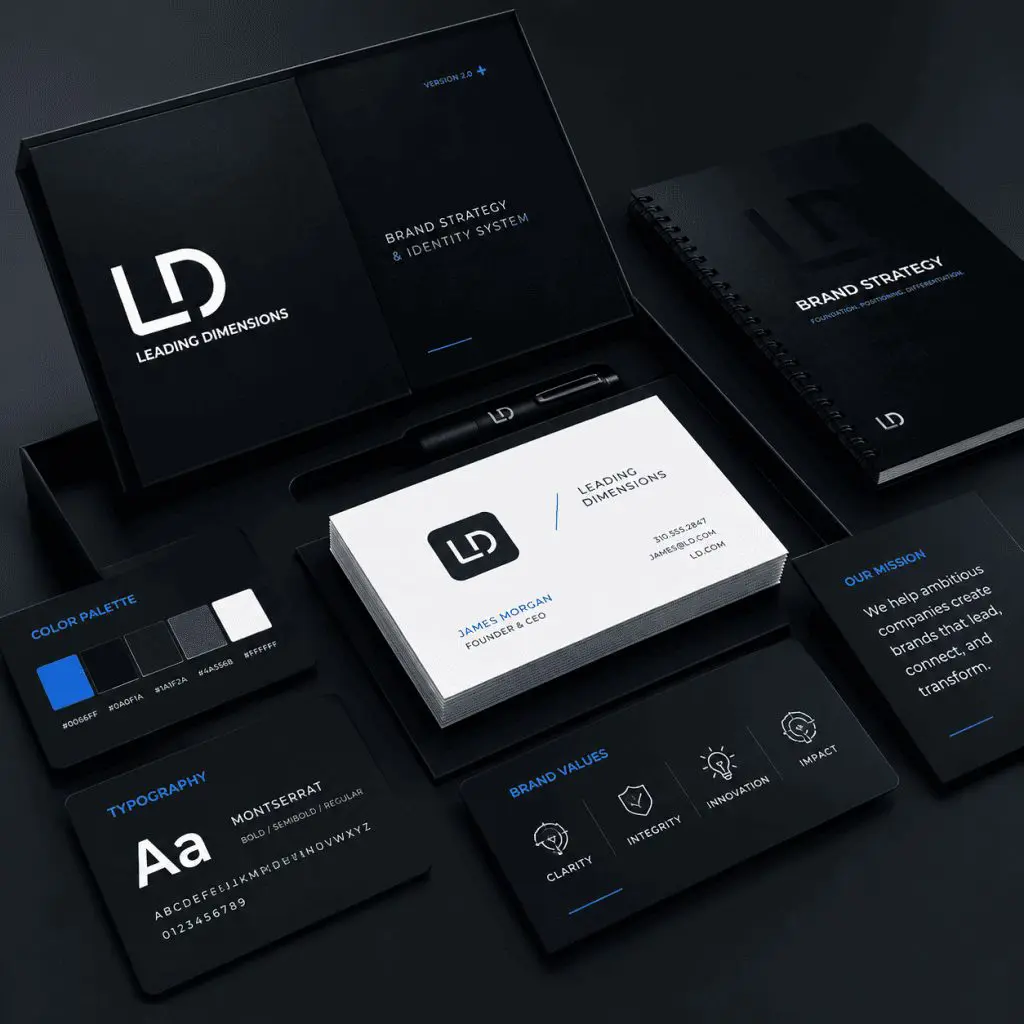
A business can outgrow its brand. It can also become bored with an identity that customers still recognize and understand. Those are different problems, and they deserve different responses.
Before choosing a rebrand or brand refresh, identify what has changed. Is the business serving a new audience? Offering something materially different? Moving into a different market position? Or does the existing message simply fail to explain the value already there?
When clearer messaging may be enough
If the identity is recognizable and usable but the offer is hard to understand, begin with positioning and copy. Review your headline, service descriptions, proof, and calls to action. Ask whether they answer the customer’s actual questions or mainly describe how you see yourself.
For example, a hypothetical consultancy might describe itself as “innovative solutions for tomorrow” when customers need to know it helps operations teams simplify scheduling. Replacing that vague promise is a messaging decision. It does not automatically require replacing the logo.
When a refresh makes sense
A refresh keeps useful recognition while improving how the identity works. This may include a better type system, clearer color relationships, stronger photography direction, more flexible layouts, or a refined version of the existing mark.
Consider a refresh when the foundation still fits but execution is inconsistent or difficult to use. Make a list of specific failures: poor small-screen legibility, conflicting templates, weak hierarchy, or a lack of usable campaign assets. “It feels old” is a starting observation, not a complete design brief.
When a deeper rebrand is justified
A rebrand may be appropriate when the current identity represents a business you no longer are. A major audience shift, merger, new positioning, or persistent confusion with another company can require broader work. Naming and legal questions should receive appropriate specialist review before rollout.
The scope should include more than a new mark. Consider the offer architecture, message, website, sales tools, internal explanation, and customer transition. A launch creates work across the business; budget for that work rather than spending everything on the presentation.
Use a decision checklist
- What concrete business change is driving the project?
- What do customers currently recognize and value?
- Which misunderstanding is the current brand creating?
- Can messaging and application fixes solve it?
- What must change across digital and physical touchpoints?
- Who will own the transition after the design is approved?
Ask the team to support answers with customer conversations, sales objections, or observed usability problems. Preferences are allowed, but they should not be mistaken for evidence.
Protect what is already working
Review the strongest existing assets before starting over. Preserve useful recognition where it supports the new direction. Test the revised system in realistic applications, and make a rollout sequence so customers do not encounter conflicting identities for months.
The right scope is the smallest coherent change that solves the actual problem—not automatically the smallest budget or the biggest creative transformation. Brand and creative strategy helps make that distinction. Then build a consistency system your team can maintain.