

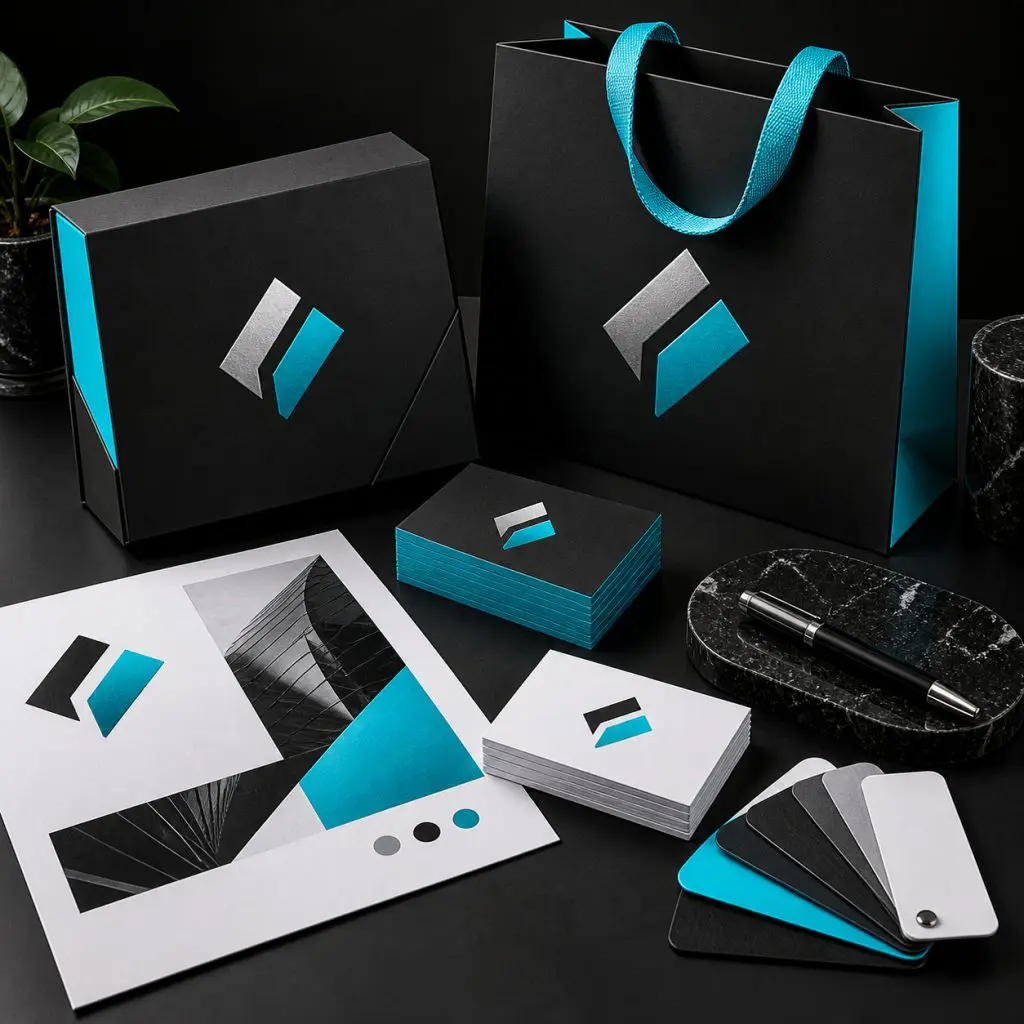
Your logo is important. It helps people recognize your business and gives your visual identity a consistent starting point. But it cannot explain an unclear offer, resolve a weak customer experience, or create a meaningful reason to choose you by itself.
Brand strategy and logo design solve different problems. Strategy defines the audience, position, promise, and reasons to believe. Design gives those decisions a recognizable visual expression. Treating the second as a replacement for the first is how a business can look new without becoming clearer.
Start with the decision your customer is making
Before debating colors or typefaces, answer four questions: Who are we trying to help? What are they trying to accomplish? What alternatives are they considering? What can we credibly offer that makes us a strong choice?
Be specific enough to make tradeoffs. “Quality service for everyone” gives a designer very little direction. A clearer brief identifies a customer, a buying situation, a useful difference, and evidence the business can support. That evidence might be a defined process, specialized capability, or a demonstrable product feature—not a claim of being the best.
Give each part of the brand a job
- Positioning explains where the business fits and why it matters.
- Messaging makes the offer, benefit, proof, and next step understandable.
- Visual identity supports recognition through typography, color, imagery, and layout.
- Customer experience determines whether the business delivers on the promise.
These parts should reinforce one another. A confident, carefully considered identity loses credibility when the website is vague or nobody responds to an inquiry. The problem is not that the logo needs to work harder. The system needs to agree.
Test the message before polishing the presentation
Ask someone unfamiliar with your business to review a key page. Then ask them to explain what you do, who it is for, and what they would do next. Listen for their interpretation rather than coaching them toward the answer you wanted.
This is a clarity check, not a substitute for customer research. Still, it can reveal obvious gaps before you invest in a full rollout. If people describe your business in incompatible ways, revise the message before spending time on minor visual preferences.
Build assets around real situations
A useful identity needs to survive a mobile website, a proposal, a small social profile, and whatever physical materials your business uses. Test those applications early. A logo presentation can be beautiful while hiding practical problems with legibility, spacing, or inconsistent messaging.
Document how the elements work together and give the team examples. That makes the brand easier to use consistently without requiring a designer to approve every routine task.
You may need a new logo. You may instead need a clearer message or a more coherent application of the identity you already have. Start with the problem. Our brand and creative service connects the thinking to the assets. For the next decision, read whether you need a rebrand or a clearer message.